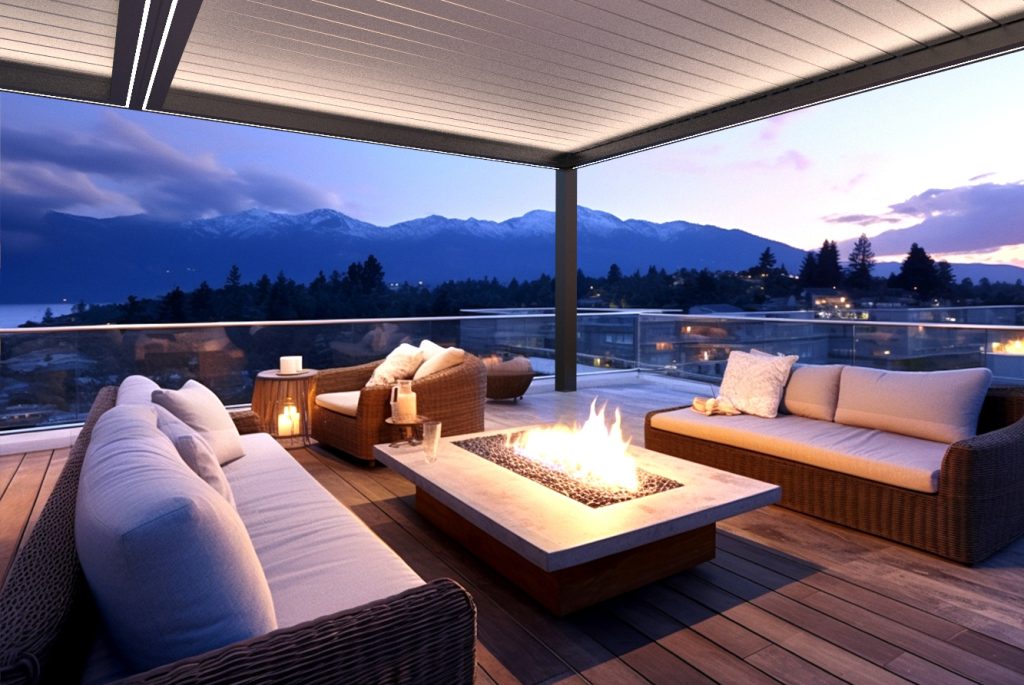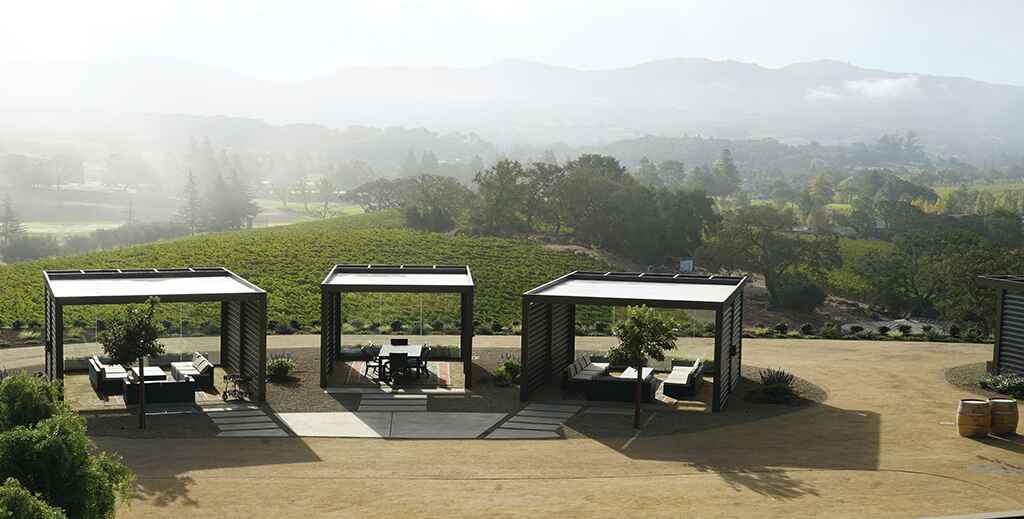
Aluminum is the better pergola material for most outdoor spaces, not because steel is “bad,” but because aluminum simply makes more sense for the way pergolas are actually used. It is lighter, easier to maintain, naturally resistant to rust, and better suited to modern outdoor living environments that need to look refined year after year.
Steel absolutely has its place. It is incredibly strong and remains essential in large-scale commercial and structural construction. But pergolas live outdoors full time. They sit through humidity, coastal air, rain, snow, harsh sun, and constant temperature swings. Over time, those conditions expose the difference between a material that is merely strong and one that is genuinely well suited for outdoor living.
That is where aluminum stands apart.
Steel vs. aluminum pergolas
At first glance, steel and aluminum pergolas can look similar. Both can create shade, define an outdoor room, and support a clean architectural design. The difference becomes clearer over time.
Steel is heavy and strong, but it is vulnerable to rust. Even galvanized or powder-coated steel can corrode if the finish is scratched, chipped, or worn down. In coastal, humid, rainy, or snow-prone regions, that maintenance concern becomes even more important.
Aluminum does not rust. It naturally forms a protective oxide layer, which helps it resist corrosion in outdoor settings. That makes it especially well suited for pool areas, waterfront homes, rooftop terraces, restaurants, resorts, and residential patios exposed to year-round weather.
For most pergola projects, the better question is not “Which material is strongest?” It is “Which material gives me the best performance, appearance, and ease of ownership outdoors?” And most of the time, that answer is aluminum.
Why Outdoor Elements uses extruded aluminum
It’s important to note that not all aluminum is the same.
Outdoor Elements uses high-grade extruded aluminum components in its louvered roof systems, along with stainless steel fasteners, because extruded aluminum delivers the structural consistency, clean architectural lines, and long-term durability modern outdoor pergolas require. The extrusion process forms heated aluminum into precise structural profiles, creating components that are strong, dimensionally stable, and exceptionally well suited for outdoor applications.
Extruded aluminum offers:
- Excellent strength for its weight
- Consistent wall thickness
- Clean architectural lines
- Strong dimensional stability
- A smooth, non-porous surface for powder coating
- Long-term resistance to rust and corrosion
This is different from thin sheet aluminum or lighter roll-formed materials. Extruded aluminum allows a pergola system to feel substantial and refined without the excessive weight of steel.
When steel has the upper hand
Steel should not be dismissed entirely.
For certain oversized structures, major commercial spans, or highly specialized engineering conditions, steel may be appropriate. Its raw strength is one of its greatest advantages.
However, most pergolas do not need the weight and maintenance burden that comes with steel. A well-engineered aluminum pergola can deliver the strength required for residential and commercial outdoor living while offering a better experience over the life of the structure.
The limitations of using steel outdoors
Steel’s biggest weakness is rust.
Once a protective coating is compromised, moisture can reach the metal underneath. Over time, that can lead to corrosion, staining, bubbling paint, rough surfaces, and structural concerns if the issue is ignored.
Steel pergolas may require:
- Repainting
- Rust treatment
- Surface sanding
- Coating repair
- More frequent inspections
- Additional maintenance in coastal or humid climates
Steel is also much heavier than aluminum. That added weight can affect installation, shipping, foundation requirements, and suitability for rooftop or elevated deck applications.
For homeowners and business owners who want a refined outdoor space without ongoing maintenance demands, those tradeoffs matter.
The advantages of aluminum pergolas
Aluminum is exceptionally well suited to outdoor living structures.
It is light enough to support elegant, streamlined designs, yet strong enough when properly engineered for demanding pergola applications. It does not rust, requires very little maintenance, and works beautifully with modern finishes and integrated features.
For Outdoor Elements, aluminum also supports the level of customization clients expect. Our pergolas and patio covers can be tailored with motorized louvers, integrated LED lighting, smart controls, automated screens, heating and cooling options, decorative panels, and a wide range of powder coat colors.
That design flexibility is a major advantage. A pergola is no longer just a shade structure. It is an outdoor room.
Climate performance across the country
Aluminum performs well across many different climates.
In coastal areas, aluminum’s corrosion resistance helps protect the structure from salt air and humidity. In rainy or humid regions, it avoids the rust issues that can affect steel. In sunny climates, powder-coated aluminum offers lasting color and finish performance. In colder regions, properly engineered aluminum pergolas can be designed for local wind and snow requirements without relying on unnecessary weight.
This broad climate versatility is one reason aluminum has become the preferred material for modern luxury pergola systems.
Finish and design flexibility
Outdoor Elements offers a wide range of powder coat colors, allowing the pergola to complement the architecture of the home or commercial property. Powder-coated aluminum provides a clean, durable finish that suits both modern and traditional spaces.
Aluminum also allows for thoughtful integration of accessories. Lighting can feel architectural rather than added on. Screens can be fitted cleanly. Heating, cooling, drainage, and smart controls can be incorporated without compromising the design.
That level of integration is central to the Outdoor Elements approach.
Cost and long-term value
Steel may sometimes appear less expensive at the beginning of a project, depending on the design. But upfront cost is only part of the equation.
Over time, steel can require more maintenance, especially in environments with moisture, salt, or heavy weather exposure. Repainting, rust repair, and finish restoration can add cost and inconvenience.
Aluminum typically offers stronger long-term value because it requires less upkeep, resists rust, and maintains its appearance with simple routine cleaning.
For a permanent outdoor living investment, that matters.
So, what is better for a pergola?
For most pergolas, aluminum is the better choice.
Steel is extremely strong and useful in certain structural applications. But for residential patios, poolside spaces, rooftop terraces, restaurants, resorts, and refined commercial outdoor areas, aluminum offers the better balance of strength, beauty, weather resistance, customization, and low maintenance.
Outdoor Elements designs its luxury pergola systems with precision-engineered extruded aluminum because it supports the way people actually want to live outdoors: comfortably, beautifully, and with fewer maintenance concerns over time.
To explore the right aluminum pergola system for your space, contact us today.