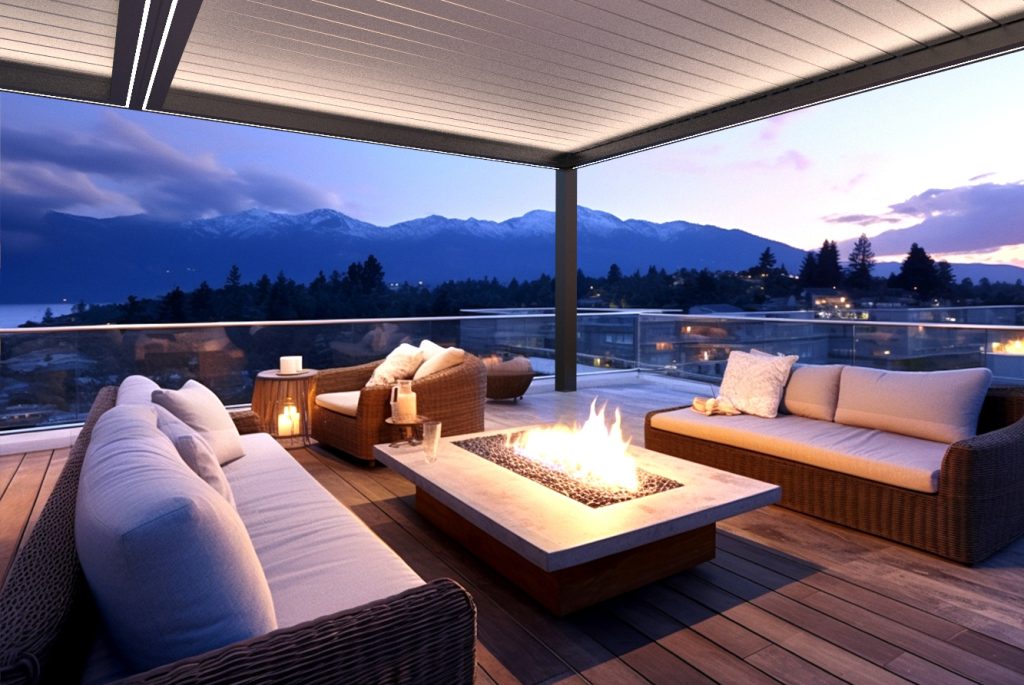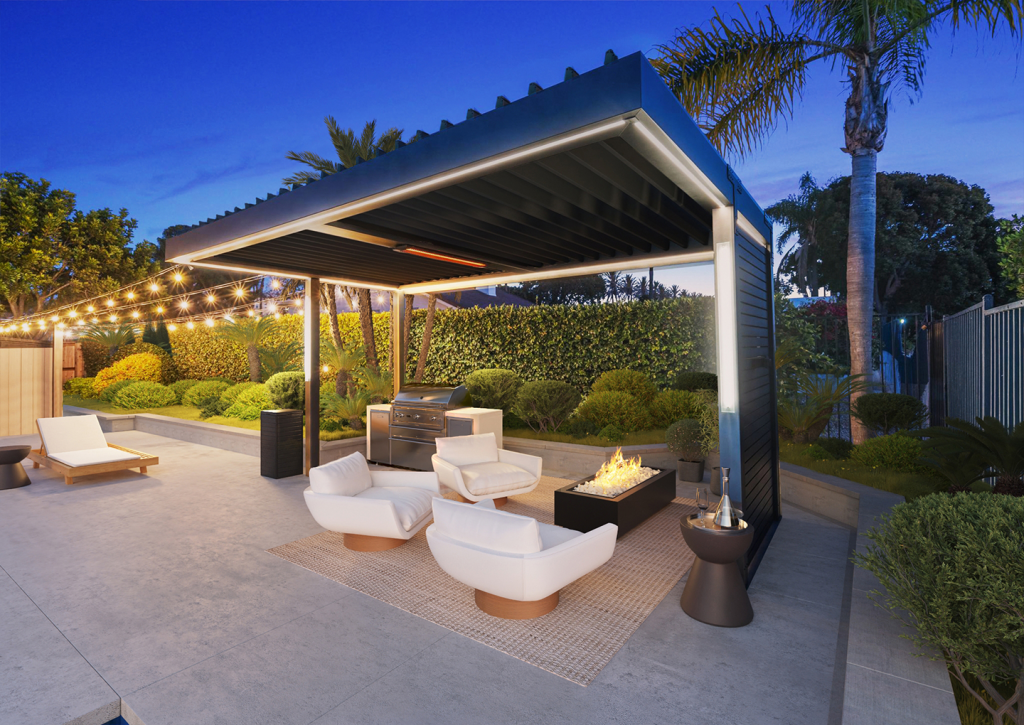
A luxury pergola is designed to enhance outdoor living in every season, but if you live in an area that experiences strong winds, it’s natural to wonder how your investment will perform when the weather changes.
So, how much wind can a pergola withstand? The answer depends on far more than a single number.
A pergola’s wind resistance is determined by its engineering, materials, foundation, installation, roof design, and even the accessories incorporated into the finished structure. Two pergolas may appear nearly identical, yet perform very differently during severe weather because what matters most isn’t what you see, it’s how the entire system has been designed and built.
If you’re planning a permanent outdoor living space, understanding these factors will help you make a more informed investment and choose a pergola that’s engineered for both beauty and long-term performance.
There Is No Universal Wind Rating for Every Pergola
Many pergola manufacturers advertise impressive wind ratings, but those numbers should always be viewed in context. A published wind rating generally applies to a specific pergola size, configuration, and installation method that has been engineered and tested under defined conditions. Change the dimensions of the structure, the roof configuration, the installation method, or the conditions of the installation site, and the performance characteristics may change as well.
Several factors influence how a pergola responds to wind, including:
• Overall size and dimensions
• Freestanding versus attached construction
• Foundation design and anchoring
• Local terrain and wind exposure
• Roof configuration
• Building code requirements
• Quality of installation
Rather than asking, “What wind speed is this pergola rated for?”, a better question is: “How has this pergola been engineered for my property?” That shift in thinking moves the conversation away from marketing numbers and toward the factors that truly determine long-term structural performance.
Engineering Matters More Than Materials Alone
Material selection certainly matters, but it’s only one part of the equation. Engineered aluminum has become one of the most popular choices for premium pergolas because it offers exceptional durability with very little maintenance. Unlike wood, aluminum won’t rot, warp, crack, or become vulnerable to insects over time. Its strength also allows manufacturers to create clean architectural profiles without sacrificing structural integrity.
However, no material—regardless of its strength—can compensate for poor engineering. A wind-resistant pergola depends on every structural component working together, including:
• Structural posts and beams
• Reinforced connection points
• Engineered hardware
• Proper footings and anchors
• Continuous load paths from roof to foundation
• Professional installation
When these elements are designed as one integrated system, wind forces can be transferred safely through the structure and into the foundation. At Outdoor Elements, we approach every pergola as a complete architectural system, not simply a collection of individual components. That integrated approach helps ensure each project delivers the performance, longevity, and refined appearance our clients expect.
Why Foundations and Anchoring Are Critical
One of the biggest misconceptions about pergolas is that the frame alone determines how well the structure performs during high winds. In reality, what’s below the pergola is often just as important as what’s above it.
Strong winds create both lateral pressure and uplift forces that attempt to move the structure. Proper anchoring allows those forces to be transferred safely into the foundation rather than into the pergola itself.
Depending on the project, that may include:
• Engineered concrete footings
• Reinforced concrete slabs
• Embedded anchor systems
• Structural attachment to an existing building
Without the proper foundation and anchoring, even a well-built pergola cannot perform as it was designed to. That’s why experienced engineering and professional installation are every bit as important as the pergola itself.
Roof Design Plays an Important Role
Not all pergola roofs interact with wind in the same way. Traditional open-roof pergolas allow a significant amount of air to move through the structure, while solid roof systems present a larger surface area that experiences different wind pressures.
Motorized louvered pergolas offer an entirely different level of flexibility. Because the louvers can adjust throughout the day to provide shade, ventilation, or weather protection, these systems should always be operated according to the manufacturer’s recommendations as weather conditions change.
The ideal louver position during high winds depends on the specific system, its engineering, and the guidance provided by the manufacturer. This is another reason why purchasing a professionally engineered pergola from an established manufacturer is so important. You’re investing in a complete outdoor living system backed by engineering, testing, and product support.
Integrated Features Should Be Part of the Engineering Conversation
Today’s luxury pergolas are designed to do far more than provide shade. Integrated lighting extends evenings outdoors. Designer ceiling fans improve airflow during the summer months. Heating systems make cool-weather entertaining more enjoyable. Roller shades provide additional privacy and sun protection, while decorative aluminum panels and frameless glass doors can transform an open pergola into a more comfortable, versatile outdoor room.
These features elevate the outdoor experience, but they also influence how wind interacts with the structure. For example:
• Roller shades can create additional wind loads when deployed.
• Decorative privacy panels alter airflow around the pergola.
• Glass enclosure systems introduce additional structural considerations for enclosed outdoor spaces.
Rather than treating these features as afterthoughts, they should be considered during the engineering and design process so the finished system performs as intended. At Outdoor Elements, every integrated feature is selected to complement the pergola as a whole, creating outdoor spaces that balance architectural beauty, everyday comfort, and long-term performance.
Your Local Building Codes Matter
Wind conditions vary dramatically from one region to another. A pergola designed for a sheltered suburban backyard may require very different engineering than one installed along a coastal shoreline, on a mountainside property, or in an open area that regularly experiences high winds.
Local building codes account for these differences by establishing structural design requirements based on factors such as:
• Expected regional wind speeds
• Terrain and exposure
• Elevation
• Geographic location
• Structural loading requirements
Working with a manufacturer that understands local permitting requirements and project-specific engineering helps ensure your pergola is designed appropriately for your property—not simply built to a generic standard.
Important Questions to Ask Before Buying a Pergola
When comparing pergola systems, don’t focus solely on the advertised wind rating. Instead, ask questions that help you understand how the structure has been engineered.
For example:
• Is this pergola engineered for my location?
• Does the published wind rating apply to the exact size I’m purchasing?
• What type of foundation is required?
• How are the posts anchored?
• Will adding roller shades, decorative panels, or glass doors affect the engineering?
• What documentation is available for permitting?
• Is professional installation recommended?
The answers to these questions often reveal far more about long-term performance than a single wind-speed number ever could.
Preparing Your Pergola for Severe Weather
Even a professionally engineered pergola benefits from routine maintenance and a little preparation before severe weather arrives. While a permanent pergola is designed to withstand everyday outdoor conditions, taking a few precautionary steps before a major wind event can help protect both the structure and everything around it.
If high winds, severe thunderstorms, or a tropical storm are in the forecast, it’s worth taking a few minutes to walk through your outdoor living space and make sure everything is secure. In many cases, the items most likely to be damaged aren’t the pergola itself—they’re the furniture, décor, and accessories beneath it.
Before severe weather arrives, homeowners should:
Inspect visible fasteners and hardware to ensure nothing has loosened over time.
Secure or store outdoor furniture, umbrellas, planters, and decorative accessories that could become airborne.
Follow the manufacturer’s recommendations for operating motorized louvered roof systems during changing weather conditions.
Retract or secure accessories such as roller shades if advised by the manufacturer.
Remove lightweight decorative items that could shift or cause damage during high winds.
Schedule periodic inspections to verify that anchors, connections, and structural components remain in excellent condition, particularly after major weather events.
It’s also important to remember that no outdoor structure is designed to eliminate every risk posed by extreme weather. Following your manufacturer’s operating guidelines and staying informed about local weather conditions are important parts of protecting your investment.
With thoughtful planning, routine maintenance, and a professionally engineered system, your pergola will be better prepared to provide years of reliable performance through changing seasons and challenging weather.
A Well-Designed Pergola Is Built as a Complete System
Wind resistance isn’t determined by a single material or one impressive specification. It’s the result of thoughtful engineering, quality materials, proper installation, and a design that considers every component—from the roof and frame to the foundation and integrated outdoor living features.
At Outdoor Elements, our aluminum pergola systems are designed as complete architectural solutions. Integrated lighting, heating, designer ceiling fans, roller shades, decorative privacy panels, and frameless glass door systems are all thoughtfully incorporated to create outdoor environments that are as functional as they are beautiful.
The result is a pergola that feels permanent, performs confidently, and complements your home for years to come. If you’re planning a new outdoor living project, our team can help you design a pergola that’s tailored to your property, your lifestyle, and your local building requirements.
FAQs
Can a pergola withstand hurricane-force winds?
It depends on the specific pergola system, its engineering, installation, and local building requirements. There is no universal wind rating that applies to every pergola.
Are aluminum pergolas good for windy areas?
Engineered aluminum offers excellent durability, corrosion resistance, and long-term structural stability. However, overall wind performance depends on the complete engineered system—not the material alone.
Do roller shades affect a pergola’s wind resistance?
They can. Roller shades and other enclosure features change how wind interacts with a pergola and should be considered during the engineering and design process.
Does a pergola need to be anchored to concrete?
Most permanent pergolas require properly engineered anchoring to a suitable foundation to perform as intended under wind loads.
Why is professional installation important?
Even the best-engineered pergola depends on proper installation. Correct anchoring, foundation preparation, and structural connections are all essential to achieving the intended performance.